VW Car-Net Customer Portal
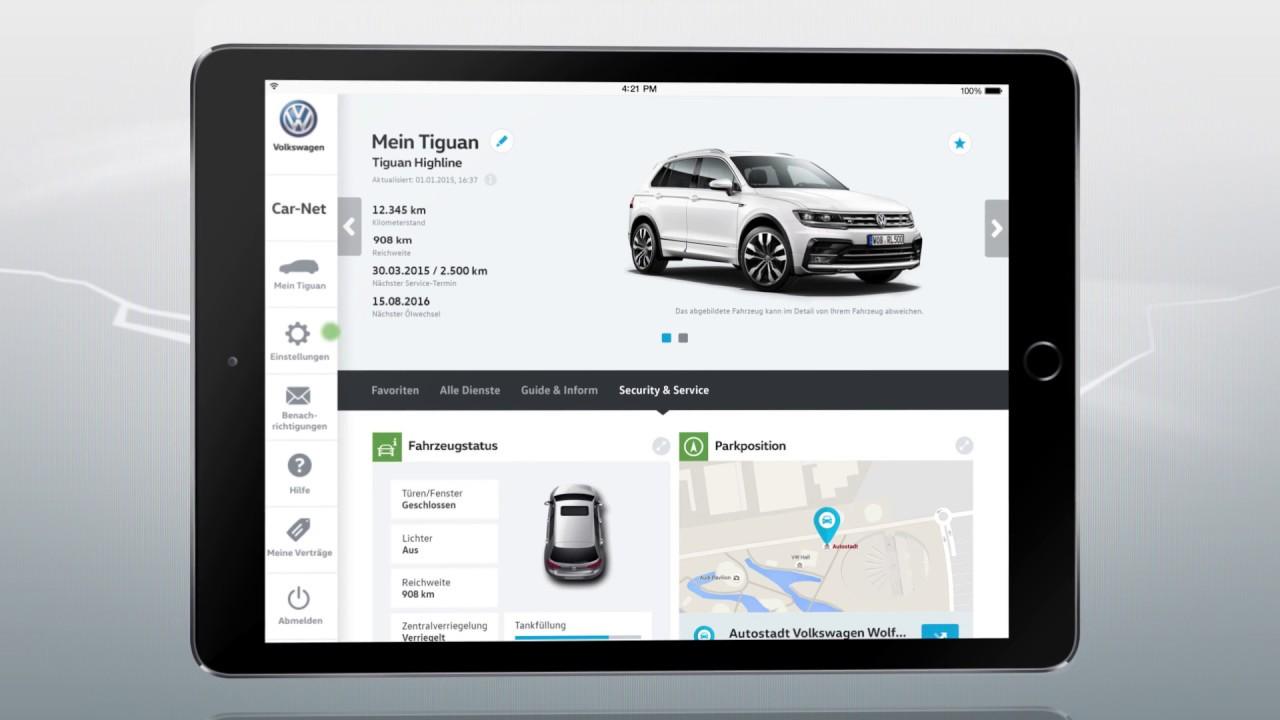
Customer web portal for Volkswagen's Car-Net connected-car platform: vehicle status, remote control and service booking in the browser.
- Client
- Volkswagen AG
- Industry
- Automotive
- Period
- 2016–2017
- Duration
- 1 year
- Role
- Frontend Engineer

Context
Development of the customer web portal for Volkswagen's “Car-Net” connected-car platform. The portal allowed vehicle owners to control and monitor their vehicles through a browser, from location lookup and status monitoring to service booking. The platform supported both passenger and commercial vehicles.
Challenge
The portal had to represent different vehicle types and generations, each with its own capabilities and APIs, in one interface. Vehicle status, location, and other data were consolidated from several backend services.
The work also involved defined development and testing processes and coordination with several teams at Volkswagen's headquarters in Wolfsburg.
Implementation
The web portal was developed as an AngularJS single-page application connected to a Java-based backend. The architecture supported a reactive interface that displayed vehicle data in real time and sent control commands to the vehicles.
Architecture Highlights
- AngularJS SPA: Reactive single-page application for complex vehicle interactions
- Java backend integration: Connection to Volkswagen vehicle APIs for real-time data
- Selenium test automation: Automated tests for core portal flows
- Multi-vehicle support: One interface for passenger and commercial vehicles
My contribution
As a Frontend Engineer at Volkswagen's headquarters in Wolfsburg, I was responsible for developing the Car-Net web portal further. The work included both new features and improvements to existing functionality.
Selenium test automation was a substantial part of my work. I implemented tests for core portal flows to identify regression risks early before releases.
The project was delivered within Volkswagen's internal Scrum processes in Wolfsburg.
Tech stack
AngularJS and JavaScript in the frontend, Java-based backend interfaces, and Selenium and Jenkins for automated tests and build processes.
- AngularJS
- JavaScript
- HTML5
- SASS
- Java
- REST APIs
- Selenium
- Webpack
- Jenkins
- Scrum
- Jira
